
The Complete Guide to Downsizing Your Home
Is your home starting to feel bigger than your needs? Maybe the kids have moved out, you’re ready for less upkeep, or you’d rather spend weekends enjoying life than maintaining extra rooms and a large yard. Whatever the reason, downsizing can be a positive next chapter—but it takes some planning.
For homeowners in Des Moines and across Central Iowa, moving to a smaller home involves more than finding fewer square feet. You’ll want to sort through belongings, prepare your current property for sale, compare your next-home options, and build a timeline that works for your household. Taking it one step at a time can make the process feel far more manageable.
Here’s how to approach downsizing with a clear plan, less stress, and confidence about your next move.
1. Get Clear on Why You’re Downsizing
Before you open a closet or browse listings, define what you want your next home to make possible. Downsizing looks different for everyone. One homeowner may want a ranch-style home with no stairs, while another wants a smaller yard, lower utility costs, or a location closer to family and everyday errands.
Write down your top priorities. Consider:
·Less time spent cleaning, repairing, and maintaining a home
·A layout that supports your current needs and future mobility
·Lower monthly housing costs or a different use for your home equity
·A smaller yard, fewer unused rooms, or less storage to manage
·Proximity to family, healthcare, shopping, parks, or community activities
Separate your must-haves from your nice-to-haves. This list will help you evaluate homes realistically and avoid choosing a property that is smaller but doesn’t fit your lifestyle.
2. Declutter Before You List Your Home
Sorting a full home can feel overwhelming, especially when belongings carry family memories. Give yourself time and start with one manageable area rather than trying to tackle the whole house in a weekend.
Use a simple four-category system
·Keep: Items you use regularly or truly want in your next home
·Give or sell: Useful belongings that someone else could enjoy
·Donate: Clean, usable items accepted by a local organization
·Recycle or discard: Items that are broken, expired, or no longer useful
Begin with low-emotion spaces, such as a linen closet, pantry, laundry room, or duplicate kitchen items. Save photographs, family keepsakes, and sentimental items for when you have more time and energy.
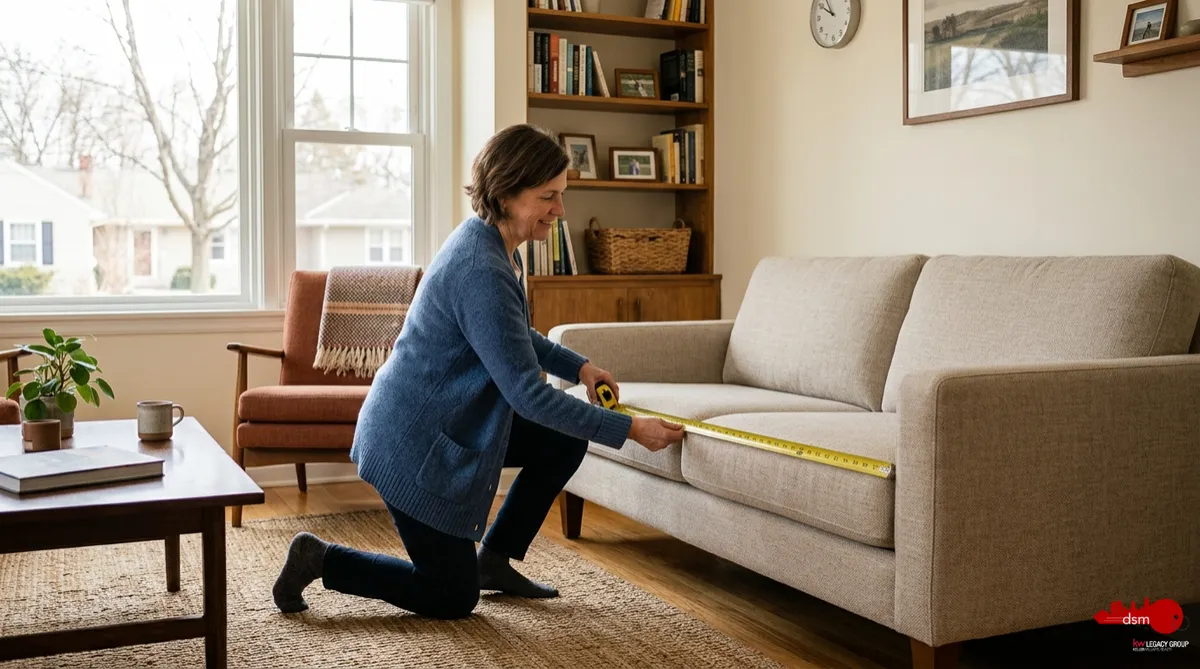
Measure furniture you hope to bring with you and compare it with the rooms in potential new homes. A favorite sectional or oversized dining table may not suit a smaller floor plan. You don’t have to decide everything immediately, but making these choices early can prevent moving costs for items that won’t fit.
3. Decide What to Keep for Your Next Home
A smaller home can still feel comfortable and personal. The goal isn’t to get rid of everything; it’s to make room for the belongings that support the way you want to live.
As you decide what makes the move, ask yourself:
·Have I used this in the past year, or does it serve a clear purpose?
·Will it fit the dimensions and storage available in my next home?
·Would I choose to pack, carry, unpack, and maintain it again?
·Is the memory attached to the item, or could a photo preserve it just as well?
For family heirlooms, consider asking relatives whether they would like specific items before donating them. For important paperwork, keep essential records organized and securely stored. If you’re unsure about valuable antiques, collectibles, or artwork, seek a qualified appraisal rather than guessing at their worth.
4. Evaluate Your Next Home Beyond Square Footage
The right downsizing home should make daily life easier—not simply give you fewer rooms. As you compare properties in Des Moines, West Des Moines, Ankeny, Urbandale, Johnston, or nearby communities, think about how the home will work on an ordinary Tuesday, not just during a showing.
Look closely at layout and ongoing costs
·One-level living, stair access, doorways, and bathroom usability
·Storage for seasonal clothing, hobbies, tools, and holiday decorations
·Yard size, exterior upkeep, snow removal, and parking
·Property taxes, insurance, utilities, HOA fees, and likely maintenance
·Distance to family, services, public spaces, and activities you enjoy
A condo or townhome may reduce exterior maintenance, but monthly association fees and rules deserve a close look. A smaller detached home may offer more privacy but still require lawn care and snow removal. Ask about the age and condition of major systems, too, including the roof, HVAC, windows, and plumbing.
Think about Iowa seasons. A driveway that needs regular snow clearing, a long walkway, or a steep front step may matter more in January than it does on a sunny showing day. Prioritize a property that feels manageable year-round.
5. Prepare Your Current Home for Sale
When you’re selling a home in Iowa, thoughtful preparation can help buyers focus on the home’s space, condition, and features. You don’t necessarily need a major renovation. Start with the updates that make the property feel clean, cared for, and easy to understand.
A practical pre-listing checklist
·Remove excess furniture and personal items to make rooms feel open
·Clean windows, floors, kitchens, bathrooms, and high-touch surfaces
·Touch up scuffed paint and replace burned-out light bulbs
·Take care of obvious minor repairs, such as loose handles or dripping faucets
·Tidy the entry, trim landscaping, and keep walkways clear
·Organize closets and storage areas so buyers can see usable space
Decluttering now can help twice: it makes the move easier and helps your home show better. Keep a folder with details about improvements, warranties, utility costs, and any known maintenance issues. Your real estate agent can help you decide which projects are worth doing before listing and which are unlikely to add enough value to justify the expense.
Pricing also matters. A local agent can review recent comparable sales and current competition to help estimate a realistic listing range. If you’re wondering about your home value in Des Moines or a nearby Central Iowa community, a comparative market analysis can provide a useful starting point. Avoid relying on one online estimate alone; condition, layout, location, and buyer demand all affect value.
6. Build a Realistic Downsizing and Moving Timeline
A calm move usually begins earlier than you think. If possible, allow eight to twelve weeks—or longer if you have a large home, extensive belongings, or a specific move date. Your timing may depend on whether you need to sell before buying, coordinate two closings, or arrange temporary housing.
An example 10-week plan
·Weeks 1–2: Set priorities, review finances, measure key furniture, and begin decluttering
·Weeks 3–4: Sort remaining rooms, research moving companies, and discuss sale preparation with an agent
·Weeks 5–6: Complete priority repairs and cleaning; review pricing and listing plans
·Weeks 7–8: List or show the home as appropriate, compare next-home options, and plan packing
·Weeks 9–10: Confirm closing and moving details, transfer utilities, update your address, and pack essentials
Treat this as a flexible guide, not a deadline. Homes don’t always sell or close on a predictable schedule, and the right next property may take time to find. Build in extra days for paperwork, weather, family commitments, and unexpected repairs.
7. Plan the Financial Side Before You Commit
Downsizing may reduce some expenses, but a smaller home isn’t automatically less expensive overall. Estimate your likely sale proceeds after the mortgage payoff, closing costs, moving expenses, and any agreed-upon repairs. Then compare the full cost of the next home, including taxes, insurance, utilities, association fees, and maintenance.
If you need proceeds from your current home to purchase the next one, talk with your lender and real estate agent early about timing and available options. Make sure you understand the terms of any offer or contingency before signing. A financial or tax professional can help with questions specific to your situation.
8. Make the Transition Easier on Yourself
Even a welcome move can bring mixed emotions. You may be excited about a simpler routine and still feel attached to the home where your family gathered. Give yourself permission to take breaks, ask for help, and mark the transition in a way that feels right to you.
·Pack a clearly labeled first-night box with medications, chargers, toiletries, basic dishes, and bedding
·Keep important documents, keys, and closing information together
·Ask friends or family to help with specific tasks rather than everything at once
·Photograph rooms or meaningful details before leaving, if that helps preserve memories
·Arrange utilities, mail forwarding, and essential services before moving day
Make Your Next Move With a Clear Plan
Downsizing is an opportunity to shape your home around the life you want now. With a thoughtful plan, you can reduce clutter, prepare your current property for sale, and choose a home that feels comfortable and manageable through every Iowa season.
If you’re considering selling your home in Des Moines or elsewhere in Central Iowa, The dsmSOLD Team can help you think through the local market, preparation priorities, pricing, and how a sale might fit your moving timeline. There’s no need to have every detail figured out before asking questions.
Let’s talk about your next move—no pressure, just practical guidance to help you make an informed decision.
The dsmSOLD Team
Phone: (515) 442-0625
Email: [email protected]
